Tie-Downs vs. Recovery Points: The Mistake That Could Destroy Your Chassis
Date Posted:23 October 2024
You’re bogged deep in the Victorian High Country or perhaps frame-deep in soft sand on a K’gari beach. You hop out, grab your snatch strap, and look for the nearest metal loop on the front of your ute. There’s a sturdy-looking steel hook welded right to the frame. "Perfect," you think. "That’ll do."
Stop right there.
If you hook a kinetic recovery strap to that factory loop, you aren't just risking your vehicle; you are potentially turning a piece of steel into a lethal projectile.
Based on extensive research into the 4x4 community, from heated Reddit debates to Facebook recovery fails, there is a massive amount of confusion regarding the difference between a cargo tie-down point and a rated recovery point. Understanding this distinction is the difference between a successful weekend away and a catastrophic chassis failure.
Is it a Hook or a Recovery Point?
Almost every 4x4 comes from the factory with shipping hooks. These are designed for static loads. Their sole purpose is to keep the vehicle from bouncing around on the deck of a cargo ship or the back of a car carrier. They are designed to hold the weight of the vehicle down, not to have several tonnes of kinetic energy slammed into them.
How to spot the difference
- Tie-Down/Shipping Hooks: Usually made of thinner steel, often a simple U shape welded directly to the thin sheet metal of the chassis. They rarely have a load rating stamped on them.
- Rated Recovery Points: These are typically heavy-duty plates (often painted bright red or orange) bolted to the strongest part of the chassis with high-tensile bolts. Crucially, they will be stamped with a WLL (Working Load Limit) or a Rated capacity (e.g., 5,000kg).
The Mechanics of Failure
A common defensive negotiation we see in online forums is: "But it’s welded to the frame, surely it's strong enough?" Engineering-wise, the answer is a hard no. There is a fundamental difference between Static Force and Kinetic Force.
When you use a Hulk 4x4 Snatch Strap, you are using a tool designed to stretch and snap back, multiplying the force to pop a vehicle out of the mud. This creates a shock load. A factory tie-down point is not designed for shear or bending forces at high velocity.
If a tie-down point fails, it doesn't just bend; it often shears off entirely. Because it is attached to a high-tension strap, it becomes a cannonball. We have seen these fly through rear windows, through intercoolers, and tragically, through people.
Can a Bridle Help?
You may have seen videos of engineers using factory points with an equaliser strap or bridle to share the load between two points. While this is technically safer than using a single point, it still doesn't turn a non-rated point into a safe one.
In a get-home emergency, you might survive a very gentle, straight-line static winch pull using a bridle. But for a kinetic snatch? The risk of twisting your chassis or ripping the point out remains too high. If you find yourself staring at your factory hooks, wondering if they'll hold, the best first step is usually to start digging, not start pulling.
Setting Your Rig Up Correctly
The good news is that upgrading your vehicle for safe recovery and cargo management is relatively inexpensive compared to the cost of a new radiator or a chassis realignment.
1. Secure Your Load First
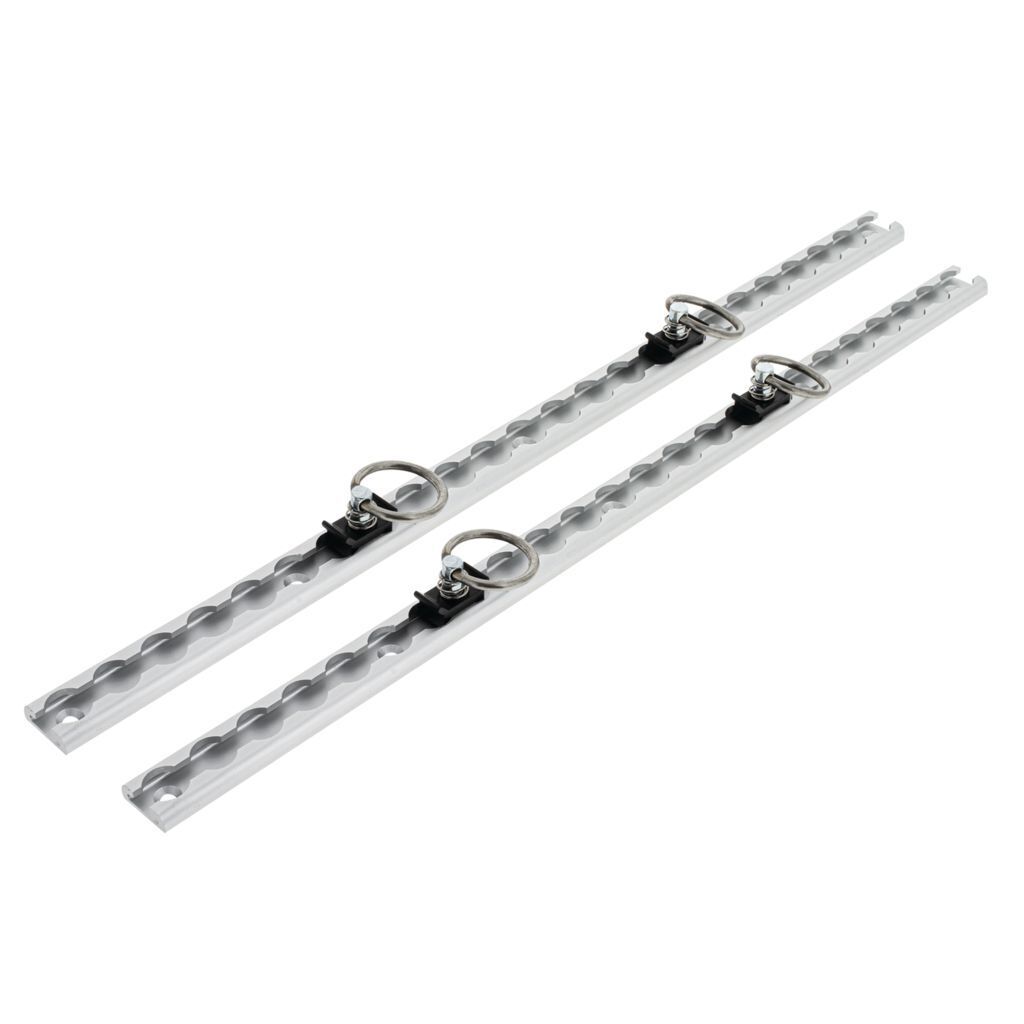
Before you even hit the tracks, your internal cargo needs to be locked down. A 40-litre fridge or a toolbox becomes a dangerous missile in a rollover or sudden stop. This is where high-quality Hulk 4x4 Tie-Down Anchor Tracks come in.
By installing dedicated anchor tracks in your ute tub or wagon floor, you create a modular, high-strength system for static loads. Combined with Hulk 4x4 Tie-Down Straps, which are designed specifically for securing gear, you ensure that your cargo stays exactly where it belongs.
2. Install Rated Recovery Points
For the pulling side of the equation, you must invest in aftermarket rated recovery points. These are vehicle-specific and designed to distribute the immense forces of a snatch recovery across the strongest parts of your frame.
A popular quick fix for the rear of the vehicle is a Hitch Receiver Recovery Point. Instead of looping a strap over a tow ball (which is another lethal mistake, tow balls are not designed for recovery loads and can snap off), you slide a rated hitch into your tow bar receiver.
3. Move to Soft Shackles
The modern 4x4er is moving away from heavy steel D shackles toward Soft Shackles. These are made from high-strength synthetic rope. If a point were to fail, a soft shackle adds significantly less mass to the flying object, greatly reducing the risk of a fatal cannonball effect.